Dehumidification and Air Scrubbers: A Plain-Language Guide for Lake County Property Owners
If you own a home, rental, office, or retail space in Lake County, you already know the air here does not play around. Central Florida humidity hangs on for much of the year. go to site Afternoon storms can dump a lot of water in a short window. During the hotter months, air conditioning systems work hard, and older buildings often show every weak spot, from tired window seals to sweating supply vents.
That is why dehumidification and air scrubbers come up so often after water loss, mold problems, and smoke events. People hear the terms, nod politely, then go back to wondering what actually matters. Is this equipment essential, or is it just there to make a job look bigger? When do you really need it? What does it do that a few fans and open windows cannot?
Those are fair questions. Property owners deserve straight answers, especially when the clock is ticking and moisture is spreading through drywall, flooring, cabinets, and insulation.
What dehumidification actually does
Dehumidification is exactly what it sounds like. It removes excess moisture from the air. That may sound simple, but on a real job site it can be the difference between a controlled dry-down and a lingering problem that turns into warped materials, persistent odor, or microbial growth.
After a leak, flood, or storm intrusion, water does not stay neatly where you first saw it. It moves. It wicks into drywall. It seeps under baseboards. It settles into framing cavities and porous materials. Even if standing water is extracted quickly, the remaining moisture begins to evaporate into the surrounding air. Once indoor humidity rises, that moisture can travel again and condense on cooler surfaces elsewhere in the building.
This is where a lot of owners get tripped up. They see that the carpet feels less wet or that the visible puddle is gone, and they assume the danger has passed. In reality, materials can still be holding a surprising amount of moisture. In Florida, where ambient humidity is already high, that moisture does not always leave the building on its own in a timely way.
A dehumidifier helps create a drying environment. It pulls water vapor out of the air so wet materials can release trapped moisture faster. Without that step, fans alone can sometimes move damp air around without truly solving the problem. Air movement has value, but moving wet air is not the same as drying a structure.
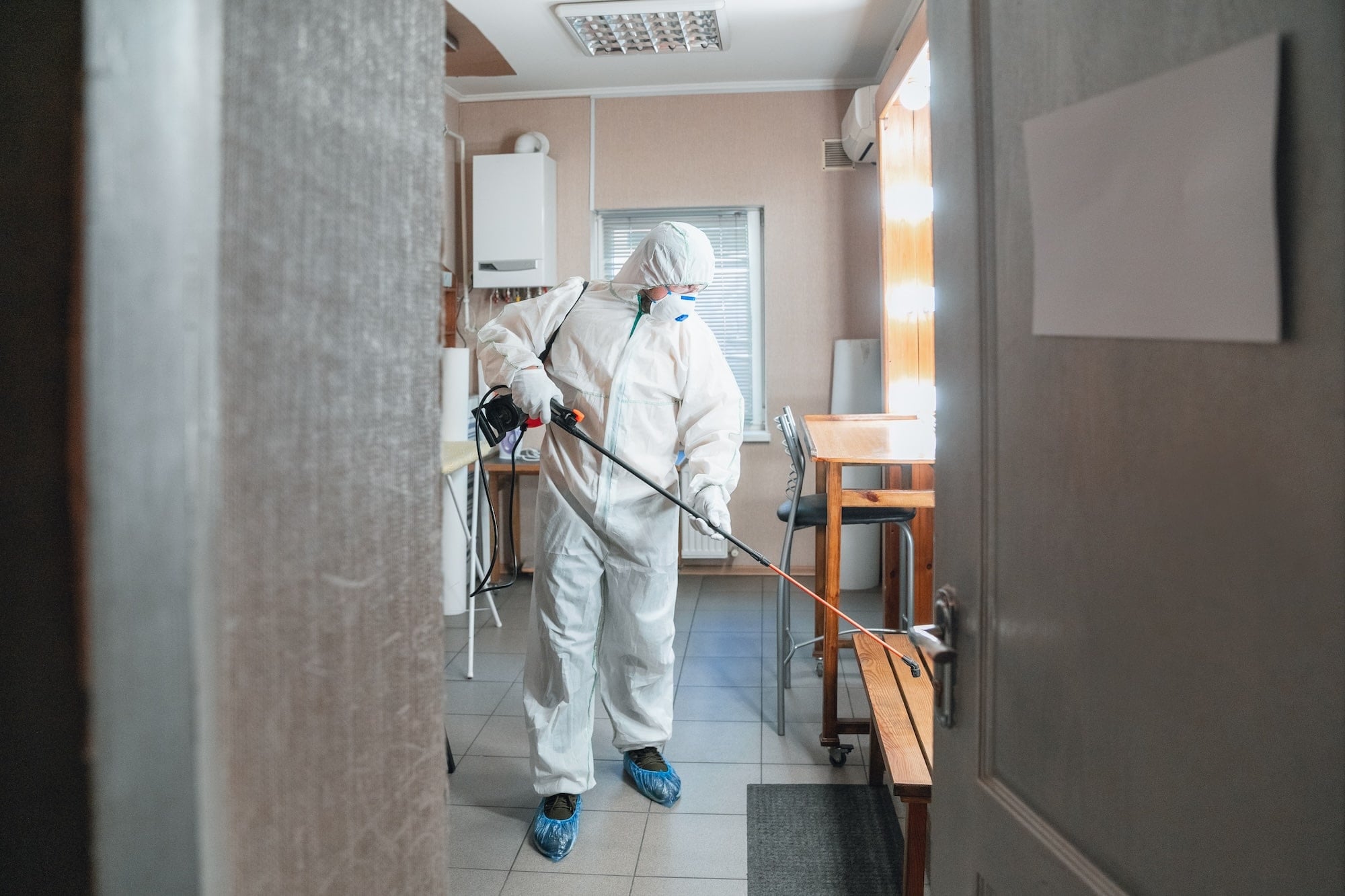
This matters for homes, but it matters just as much for a property manager water damage situation in a multifamily or commercial setting. One wet unit, one hallway, or one office suite can affect neighboring spaces if humidity drifts and HVAC systems circulate damp air.
Why Lake County buildings are vulnerable
Lake County property owners deal with a mix of conditions that make moisture control tricky. Summer heat pushes air conditioners hard. Frequent rain events raise outdoor humidity. During hurricane season preparation Florida owners are advised to start before the season begins, and that is smart not only for shutters and supplies, but for the building envelope too. Florida’s official hurricane season runs from June 1 through November 30, and waiting until a storm is named is usually too late for meaningful prep.
Older homes in places like Leesburg, Mount Dora, and Clermont can be especially vulnerable. A home inspection older homes Florida buyers arrange may reveal moisture staining, past leaks, or ventilation issues, but not every weakness shows up in one visit. Long-owned homes can also have hidden trouble from years of minor roof leaks, plumbing drips, or AC performance issues.
Commercial buildings have their own version of this problem. Roof penetrations, tenant build-outs, aging mechanical systems, and after-hours leaks can let moisture sit unnoticed. By the time a janitorial crew or tenant reports it, a small loss may have become a larger drying and indoor air quality Florida concern.
Air scrubbers, in plain English
An air scrubber is a machine that pulls in air, filters it, and releases cleaner air back into the space or exhausts it, depending on how the setup is designed. People often confuse air scrubbers with dehumidifiers because both machines show up on restoration jobs, but they do different things.
A dehumidifier removes moisture from the air. An air scrubber removes airborne particles.
Those particles may include dust, debris, and other fine material disturbed during cleanup. In some situations, air scrubbers are used to help reduce the concentration of airborne contaminants while damaged material is being removed or while odors are being addressed. They are often part of containment strategies during commercial mold remediation or other projects where keeping affected air from spreading matters.
Think of it this way. If dehumidification helps dry the structure, air scrubbing helps manage what is floating in the air while that work happens.
That distinction is useful because owners sometimes hear a crew say they are bringing in “drying equipment” and assume every machine is there for the same reason. It is better to ask what each piece of equipment is supposed to accomplish. A good contractor should be able to explain that in ordinary language.
When these machines make sense, and when they may not
Not every spill calls for a full-scale equipment setup. If a small amount of clean water is contained to a hard surface and addressed immediately, the fix can be straightforward. But once water reaches absorbent materials, affects multiple rooms, or has been sitting long enough to raise humidity indoors, proper drying becomes more important.
The same common-sense approach applies to air scrubbers. If no demolition is happening, no dust or microbial concern is present, and there is no odor issue to manage, an air scrubber may not add much value. On the other hand, if wet drywall is being removed, if visible mold growth is present, or if smoke odor removal is part of the scope, filtration can be a very practical part of the plan.
One of the hardest judgment calls is the “almost dry” building. On the surface, things look normal. The paint is intact. The flooring feels stable. There is no obvious puddling. Yet the air feels heavy, there is a faint musty note, or occupants start noticing discomfort. That is often where experience matters. Moisture problems do not always announce themselves with dramatic damage.
The phrase that causes confusion: mitigation vs remediation
Owners often hear both terms and assume they are interchangeable. They are related, but not the same.
Mitigation vs remediation is really the difference between stopping a problem from getting worse and addressing the damaged or contaminated conditions that remain. Mitigation is the urgent phase. Water extraction, temporary drying, moisture control, and emergency stabilization fit here. Remediation is the corrective phase. That may involve removing damaged materials, cleaning affected areas, addressing mold growth where present, or completing repairs through the appropriate trades.
This matters because property owners can become frustrated when they think the emergency crew is “done,” yet parts of the building still need additional work. In a water loss, dehumidification often belongs to mitigation. If that moisture event led to fungal growth in building materials, then commercial mold remediation or residential mold remediation work may follow, depending on the property type and scope.
The distinction also helps when communicating with tenants, boards, maintenance teams, and insurers. If everyone understands whether the current goal is to stabilize, dry, clean, or rebuild, the process feels a lot less chaotic.
Mold myths that cause expensive delays
Mold myths are everywhere in Florida. The most common one is that if you cannot see mold, you do not have a moisture problem. Another is that testing is always the first step. The Florida Department of Health takes a practical view here. It advises looking for signs of moisture or water damage and does not recommend mold testing or sampling as the first step.
That advice lines up with real-world job conditions. If a wall is wet, if a ceiling has active staining, if materials have stayed damp, the first priority is finding and correcting the moisture source. Air samples do not dry a wall. Lab reports do not stop a leak.
Another persistent myth is that bleach solves every mold problem. Surface cleaning has a place in some limited situations, but it is not a cure-all for wet porous materials or hidden moisture inside assemblies. Drying, source control, and proper removal of damaged material are what prevent repeat problems.
A final myth is that mold only matters after major flooding. In Lake County, plenty of growth issues begin with smaller events, a slow plumbing leak under a sink, condensate overflow near an air handler, chronic bathroom humidity, or rain intrusion around a window. The big dramatic losses get attention. The quiet, repeated moisture issues often cause the longer headaches.
A practical water damage checklist for the first day
When water shows up where it should not, speed matters. The first several hours often shape how complicated the job becomes.
- Stop the source if you can do so safely, whether that means shutting off water, covering an opening, or isolating the affected area.
- Protect people first. Watch for slip hazards, electrical concerns, and ceilings that may be holding water.
- Document what you see with photos and notes, especially before moving items or starting cleanup.
- Remove or protect contents that can be saved, including paper records, electronics, textiles, and furniture.
- Call for professional help if water has spread into building materials, if the source is contaminated, or if humidity is rising through multiple spaces.
That short water damage checklist is not a substitute for a site assessment, but it helps prevent the most common early mistakes. One of those mistakes is running the HVAC system as usual without understanding where the moisture is traveling. Another is assuming a wet area will “air out” if the weather is sunny. In Florida, outdoor air can add as much trouble as it solves.
What dehumidification looks like on a real job
Most owners picture one machine in the corner humming away. Sometimes that is close to reality. Often it is not.
On a meaningful drying job, equipment placement is deliberate. Air movement may be directed across wet surfaces. Dehumidification is sized to the affected area and moisture load. Doors may be kept closed to control the drying chamber. Crews may check moisture conditions over time rather than making one quick visit and guessing. The process can feel slow to an owner who wants everything back to normal by tomorrow, but wet building materials usually dry on their own schedule.
This is also where trade-offs show up. Aggressive drying can be helpful, but it needs to match the materials and conditions. Too little control and you get lingering moisture. Too much disruption without a clear reason and you add noise, heat, inconvenience, and cost. The best work tends to look boring from the outside. It is methodical.
For rental housing or mixed-use buildings, this can get even more delicate. Occupants may still be on site. Noise from equipment can affect sleep or business operations. Access windows may be limited. A property manager water damage response has to balance urgency with coordination, especially when several units or tenants are involved.
Where air scrubbers help most
Air scrubbers tend to earn their keep when something in the space is being disturbed or when indoor air quality is already a concern. If demolition is opening wall cavities, if damaged finishes are being removed, or if a previous smoke event left particulates and odor in the air, filtration becomes more than a nice extra.
Smoke odor removal is a good example. Odor is not just a smell hanging in empty space. Smoke residues can settle on surfaces and contents, and disturbed particles can continue to affect the space. An air scrubber does not replace cleaning, but it can support the cleanup environment.
The same principle applies to mold-related work. If contaminated materials are being removed, controlling airborne spread matters. That is one reason owners hear about containment and filtration in commercial mold remediation jobs. The machine is part of a larger strategy, not magic by itself.
For people sensitive to dust or already worried about indoor air quality Florida issues, clear communication helps. An owner should know whether the air scrubber is there for odor, dust control, containment support, or general particle reduction during the work.
Older homes, renovation, and the asbestos question
Lake County has plenty of older structures, and with older structures comes another important topic. If renovation or demolition is planned, especially in an older building, asbestos cannot be treated casually. Florida regulates asbestos work through licensure and abatement rules, and the state’s rules are aimed at minimizing fiber release during demolition and renovation. Requirements can differ based on the type of building and project, and some single-family homes or small residential buildings may be treated differently depending on the situation.
That is why an asbestos survey before renovation can matter so much. Property owners sometimes focus on paint colors, flooring samples, and schedules while overlooking the materials hidden behind walls, above ceilings, or around old mechanical systems. If suspect materials are disturbed without the right process, the project can become more expensive and more disruptive than anyone planned.
The safest path is to ask the right questions early and use properly licensed professionals where required. Florida’s licensing structure for asbestos contractors and consultants exists for a reason. This is not an area for guesswork.
How to judge a restoration response without being an expert
You do not have to know every technical standard to tell whether a contractor is communicating well. Clarity is a strong signal. If a crew can explain why they are using dehumidification and air scrubbers, what they are trying to achieve, and what comes next, that usually points to a better process than vague reassurances.
It also helps to understand that certifications exist in the restoration field. The IICRC is a certification organization for cleaning, inspection, and restoration fields, with programs that include Applied Microbial Remediation Technician, Applied Structural Drying Technician, and Building Moisture Inspection. A certification alone does not guarantee excellent work, but it can show that a company or technician has pursued field-specific training.
Here are a few useful questions to ask when a drying or cleanup plan is being proposed:
- What problem is each machine solving in this specific space?
- How will you tell whether materials are actually drying, not just feeling dry on the surface?
- Are you stabilizing the damage, or are you also handling remediation and repairs?
- If mold, smoke, or renovation hazards are part of the picture, how will you control what moves through the air?
- Who needs to be involved if regulated materials are suspected before demolition or renovation begins?
Those questions work whether you own a home in Groveland, manage rental units in Leesburg, or oversee a retail strip elsewhere in the county. They cut through jargon fast.
Hurricane season changes the conversation
During hurricane season preparation Florida property owners often think first about roofs, generators, and sandbags. Those matter, of course. But post-storm moisture management deserves attention too. Wind-driven rain, roof leaks, power interruptions, and HVAC shutdowns can all create a perfect setup for trapped moisture indoors.
The properties that fare best are usually not the ones with the fanciest gear. They are the ones with fewer unresolved maintenance issues before the storm, clear access to shutoffs and key areas, and a plan for quick response if water gets in. A slow response in Florida weather can turn a manageable intrusion into a more serious drying and remediation project.
This is also where 24/7 emergency cleanup Lake County availability becomes practical, not just promotional. Storms and plumbing failures rarely happen on a neat weekday schedule. Rapid response does not solve everything, but it can reduce how far moisture spreads and how much material has to be removed later.
The plain-language takeaway
Dehumidification and air scrubbers are not mysterious, and they are not interchangeable. One helps remove excess moisture from the air so wet materials can dry. The other helps clean the air by filtering out particles, which can be especially useful during demolition, cleanup, or odor-related work.
For Lake County property owners, the bigger lesson is that moisture control is rarely just about the visible wet spot. It is about what the air is doing, what the materials are holding, and how quickly the situation is assessed and stabilized. In a humid climate, delays cost more than people expect.
If you remember nothing else, remember this: dry the structure, control the air, fix the source, and do not let myths steer the job. That mindset serves homeowners, landlords, property managers, and commercial owners alike, whether the issue starts with an AC problem, a summer storm, a roof leak, or a renovation surprise in an older Florida building.